


How does the Weimar dining table achieve a paradoxical balance between "visual slimness" and "structural stability" through its tapered leg design?
Release Time : 2026-01-14
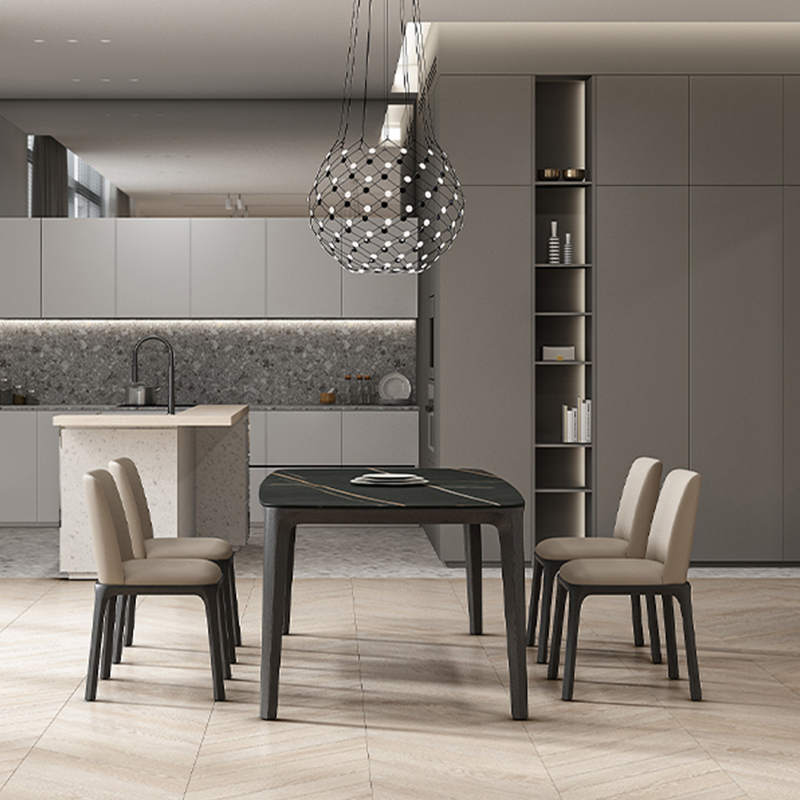
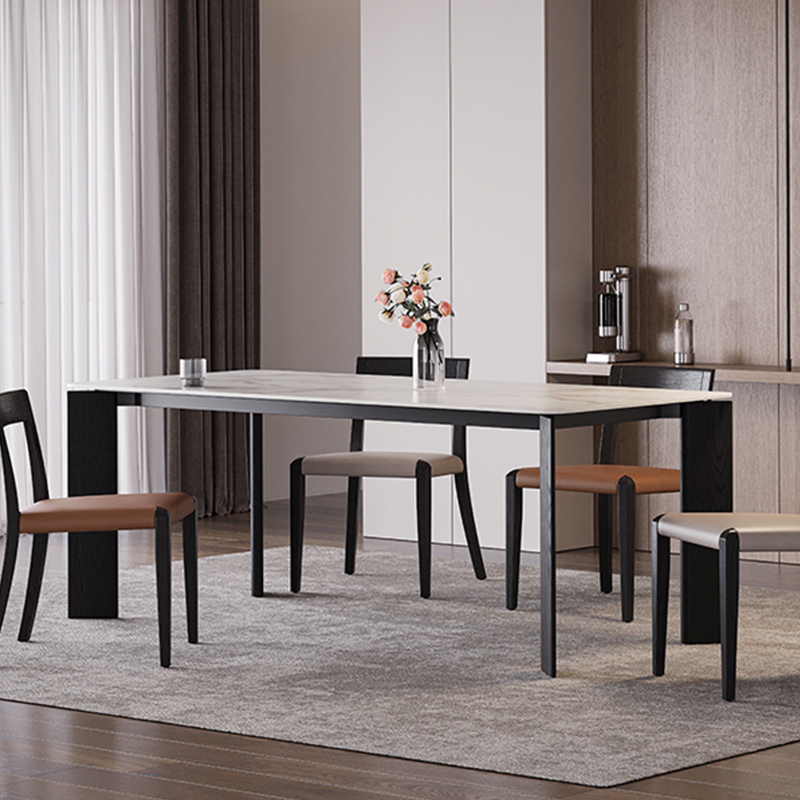
In contemporary home design, the dining table is not only a functional piece of furniture but also a focal point of spatial aesthetics. People desire a light and airy feel, free from visual weight, yet also demand sturdiness, stability, and durability—these seemingly contradictory demands are ingeniously resolved in the Weimar dining table designed by Kemu. Its core secret lies in its precisely calculated and aesthetically sculpted tapered legs. With engineering ingenuity as its backbone and minimalist aesthetics as its soul, it bridges a seamless gap between mechanics and visual appeal, achieving a unique experience of "appearing suspended from afar, yet as stable as a mountain up close."
1. Tapered Structure: A Dual Act of Mechanical Efficiency and Visual Weight Reduction
The legs of the Weimar dining table are not straight rods with a uniform cross-section, but rather adopt a tapered profile that gradually narrows from bottom to top. The lines flow smoothly from the thicker support end at the bottom to the slender end where it connects to the tabletop. This design is far more than just aesthetics: from a structural mechanics perspective, the tapered shape efficiently transfers the vertical load and lateral forces on the tabletop to the ground, while the widened bottom significantly enhances resistance to overturning moments; the narrowed top reduces the contact area with the tabletop, minimizing the visual presence of the supporting structure. More importantly, the tapered profile conforms to the material's stress distribution principles—the bottom bears greater bending moments, thus requiring greater rigidity; the top experiences less stress, allowing for moderate thinning. In this way, while maintaining overall strength, the visual bulk is minimized.
2. 45-Degree Tilt: A Synergy of Spatial Ability and Structural Reinforcement
The table legs are not perpendicular to the ground, but rather tilted outwards at a precise 45-degree angle. This angle was carefully considered: on one hand, the tilted layout expands the base support surface, significantly improving lateral stability and effectively resisting wobbling during use; on the other hand, the extended legs provide ample legroom for the dining chairs, allowing users to sit naturally even in a compact small dining room without their knees hitting the table legs. This "outer-expanding, inner-hollow" layout optimizes ergonomics and further enhances the illusion of a "floating tabletop"—because the support points are cleverly "hidden" at the edge of sight, the central area appears unsupported yet steadily suspended.
3. Thickness Alignment: The Magic of Visual Harmony in Details
Another ingenious feature of the Weimar dining table is that the outermost thickness of the legs is perfectly consistent with the tabletop finish. When viewed from the side, the edges of the legs and the tabletop form a continuous, flush line, blurring the boundary between the supporting structure and the tabletop. This "thickness alignment" technique eliminates the abrupt three-dimensionality of traditional table legs, making the overall silhouette more two-dimensional and greatly enhancing the sense of lightness. At the same time, the smooth transition between thick and thin legs avoids abrupt changes, giving the metal or wooden legs a sculptural organic rhythm, showcasing the delicacy of haute couture craftsmanship.
4. Floating Gap: The Philosophy of Lightness Created by Negative Space
The deliberately left tiny gap between the tabletop and the base frame is the finishing touch to the "floating" effect. This design severs the visual connection between the solid surfaces, making the heavy stone or solid wood tabletop appear to float in mid-air. However, this is not an illusion achieved at the expense of structure—hidden high-strength connectors ensure the effective transfer of force. This "solid connection, virtual break" technique embodies the "less is more" philosophy of modern design: achieving maximum functionality and the most beautiful aesthetic with minimal physical presence.
The tapered legs of the Weimar dining table are a perfect blend of rationality and sensibility. They interpret the principles of mechanics with geometric language, bearing the weight of life with minimalist lines. In the hands of Kemu Design, steel or wood are no longer cold materials, but mediums imbued with a sense of breath and poetry. This dining table not only holds daily meals but also a profound understanding of the aesthetics of life—true stability never needs to be proven by bulkiness; true lightness never comes at the expense of reliability.
1. Tapered Structure: A Dual Act of Mechanical Efficiency and Visual Weight Reduction
The legs of the Weimar dining table are not straight rods with a uniform cross-section, but rather adopt a tapered profile that gradually narrows from bottom to top. The lines flow smoothly from the thicker support end at the bottom to the slender end where it connects to the tabletop. This design is far more than just aesthetics: from a structural mechanics perspective, the tapered shape efficiently transfers the vertical load and lateral forces on the tabletop to the ground, while the widened bottom significantly enhances resistance to overturning moments; the narrowed top reduces the contact area with the tabletop, minimizing the visual presence of the supporting structure. More importantly, the tapered profile conforms to the material's stress distribution principles—the bottom bears greater bending moments, thus requiring greater rigidity; the top experiences less stress, allowing for moderate thinning. In this way, while maintaining overall strength, the visual bulk is minimized.
2. 45-Degree Tilt: A Synergy of Spatial Ability and Structural Reinforcement
The table legs are not perpendicular to the ground, but rather tilted outwards at a precise 45-degree angle. This angle was carefully considered: on one hand, the tilted layout expands the base support surface, significantly improving lateral stability and effectively resisting wobbling during use; on the other hand, the extended legs provide ample legroom for the dining chairs, allowing users to sit naturally even in a compact small dining room without their knees hitting the table legs. This "outer-expanding, inner-hollow" layout optimizes ergonomics and further enhances the illusion of a "floating tabletop"—because the support points are cleverly "hidden" at the edge of sight, the central area appears unsupported yet steadily suspended.
3. Thickness Alignment: The Magic of Visual Harmony in Details
Another ingenious feature of the Weimar dining table is that the outermost thickness of the legs is perfectly consistent with the tabletop finish. When viewed from the side, the edges of the legs and the tabletop form a continuous, flush line, blurring the boundary between the supporting structure and the tabletop. This "thickness alignment" technique eliminates the abrupt three-dimensionality of traditional table legs, making the overall silhouette more two-dimensional and greatly enhancing the sense of lightness. At the same time, the smooth transition between thick and thin legs avoids abrupt changes, giving the metal or wooden legs a sculptural organic rhythm, showcasing the delicacy of haute couture craftsmanship.
4. Floating Gap: The Philosophy of Lightness Created by Negative Space
The deliberately left tiny gap between the tabletop and the base frame is the finishing touch to the "floating" effect. This design severs the visual connection between the solid surfaces, making the heavy stone or solid wood tabletop appear to float in mid-air. However, this is not an illusion achieved at the expense of structure—hidden high-strength connectors ensure the effective transfer of force. This "solid connection, virtual break" technique embodies the "less is more" philosophy of modern design: achieving maximum functionality and the most beautiful aesthetic with minimal physical presence.
The tapered legs of the Weimar dining table are a perfect blend of rationality and sensibility. They interpret the principles of mechanics with geometric language, bearing the weight of life with minimalist lines. In the hands of Kemu Design, steel or wood are no longer cold materials, but mediums imbued with a sense of breath and poetry. This dining table not only holds daily meals but also a profound understanding of the aesthetics of life—true stability never needs to be proven by bulkiness; true lightness never comes at the expense of reliability.